
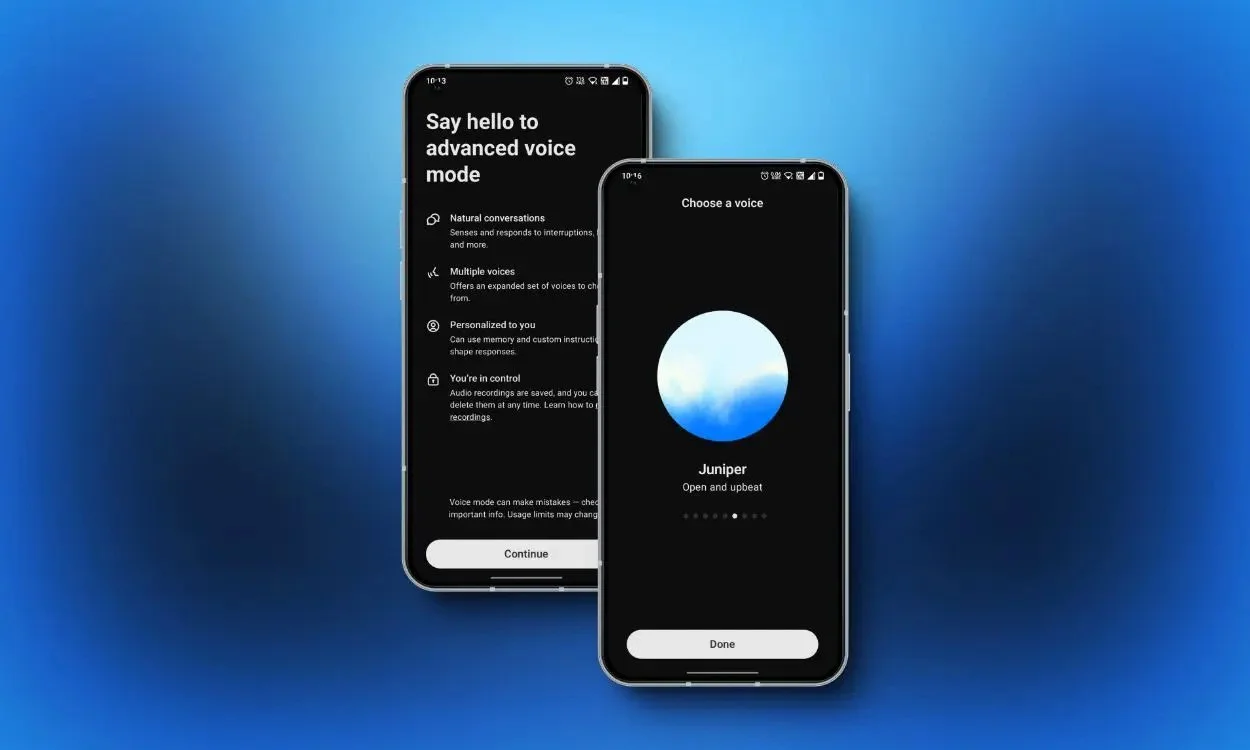
Ever wanted to grow a second brain? Try ChatGPT Voice.
I talk to ChatGPT Voice for over two hours a day. Here are my top learnings. First, I provide all the context, the files, the documents, the images before I hop into voice mode. Second, when I start the chat, I always confirm these three things: ...

How to Avoid the ‘Uncanny Valley’ of AI Characters
Everyone knows what it feels like when that uncanny valley sensor gets triggered. This is why we've spent more than 18 months testing and refining our approach to creating repeatable AI characters.
And one of the most honest ways to test and learn was to take a look in the mirror and try to recreate myself. What are the key nuances and traits that make anyone look and sound like them?
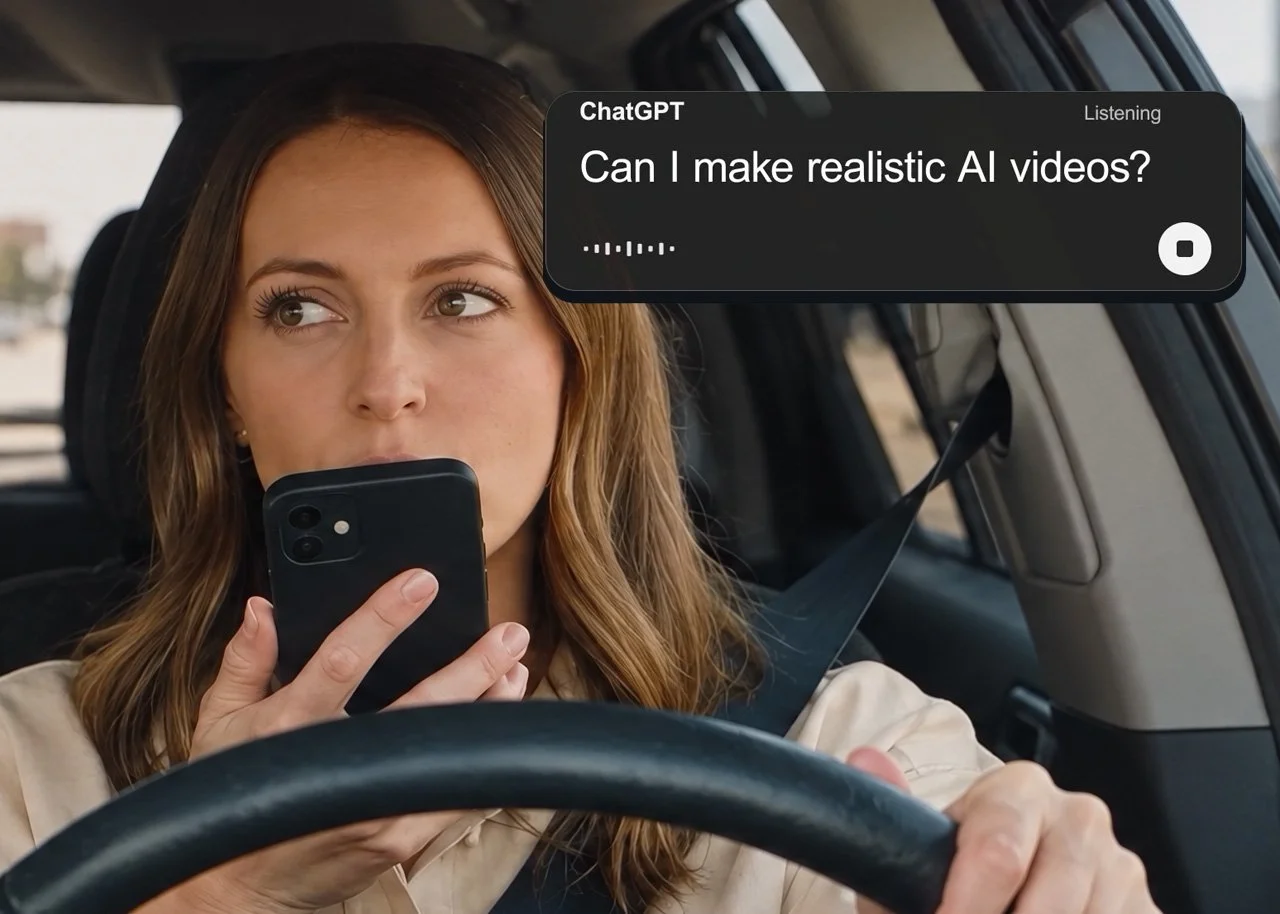
“Can I make realistic AI videos?”
Welcome to FAIQ, where we answer the internet's most searched questions about AI production. Just about anyone can now hop onto ChatGPT or Claude and ask it to create a 30-second script that Seedance can then bring to life. The barrier is no longer the execution layer, it's the quality of the message. Meaning, is this story, this piece of content, actually something that's gonna be worth watching?
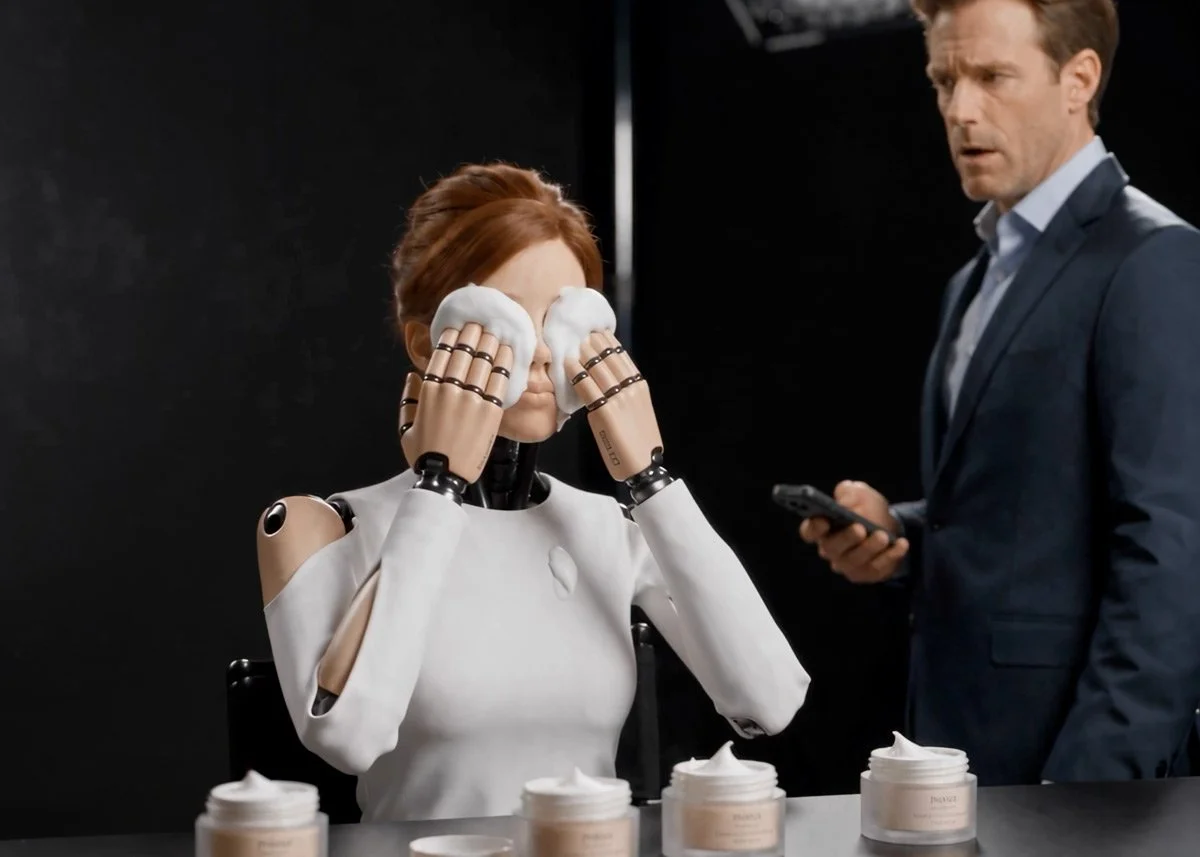
"Do commercials have to say if they use AI?"
Welcome to FAiQ, where we answer the internet's most searched questions about AI production. I'm not a lawyer, but we have had a lot of experience making AI ads over the past 2.5 years at Adwaken. Every client has a different risk tolerance. There's still a lot being sorted out between states that have mandates and the FTC's AI compliance rules. For now, it might be worth adding a disclaimer.
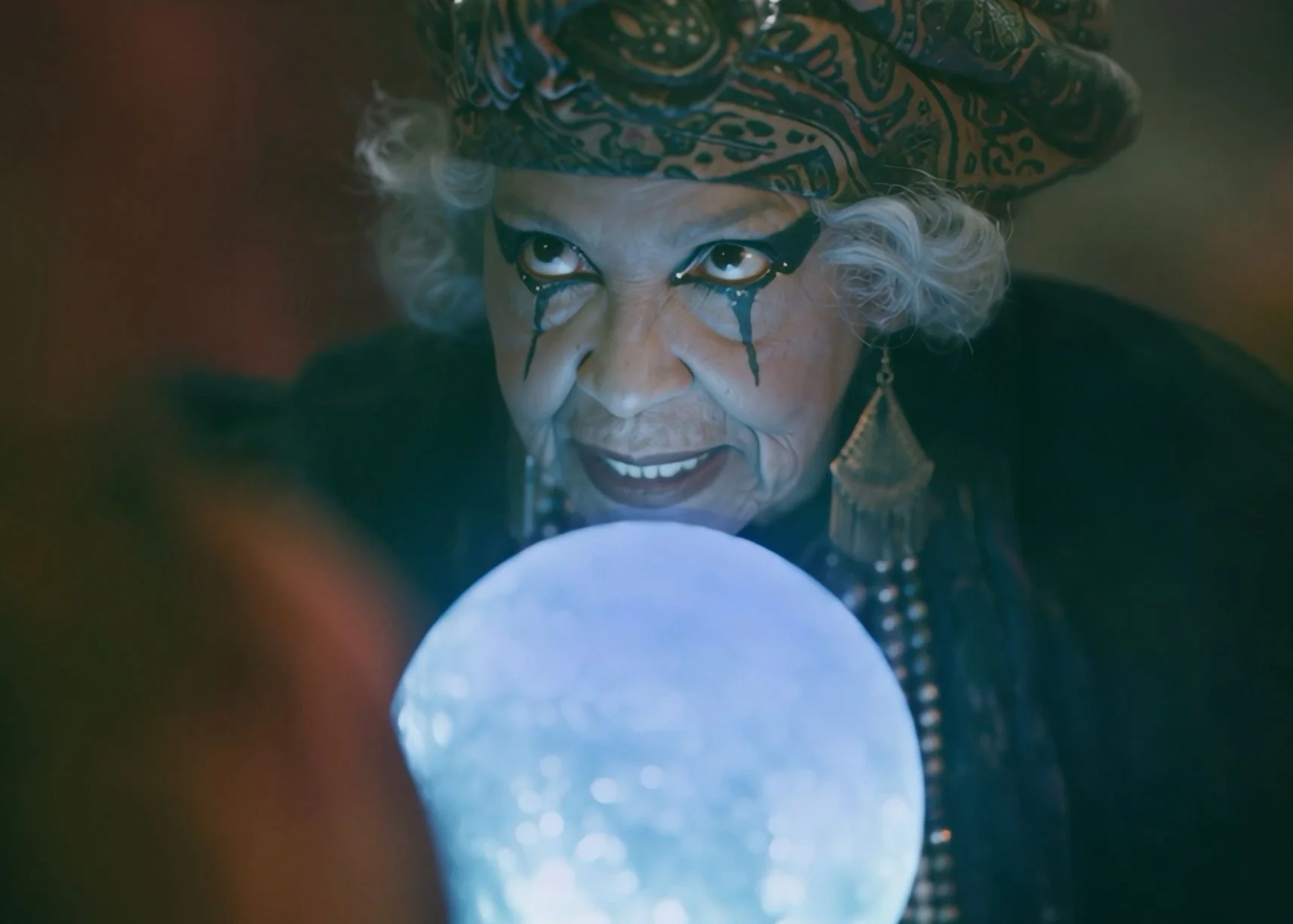
“What is an AI video production company?”
Welcome to FAiQ, where we answer the internet's most searched questions about AI production. AI-native production means you start in the digital space and then stay there throughout the whole production. Hybrid productions are generally a blend of real-world footage with AI production methods. Traditional productions are…

What’s changed the most over the past 2+ years?
What's changed the most over the past two years with AI image generation? It's not just realism, it's control. Renderers can now have more texture and depth and details, things that used to be very difficult to recreate on a consistent basis. Liquids, transparencies, reflective surfaces, they're all more convincing now.

The Biggest Mistake Any Company Can Make
The biggest mistake any company can make is expecting AI to be a silver bullet. After two and a half years of building AI-native production workflows, we've seen where the real leverage is. We suggest starting with the outcome you want– and then think through, "Is this really the right tool to get us there?"

Top Takeaways: 2026 ThinkLA Panel ‘The Rise of the Tinkerer’
30-minutes is tight for just about any panel to stick to, never mind if you’re getting 3 AI-focused creative leaders together! It was a pleasure getting to talk the future of creativity with Joe Reynoso and Alicia Marder at ThinkLA 's 'The Rise of the Tinkerer' panel yesterday.
For those looking to start training up their 'AI muscles,' here are several key takeaways and hacks we discussed...

How We Build Broadcast-Quality AI Characters
We shot hundreds of photos and spent thousands of hours testing which visual inputs create the most repeatably accurate character models. The next page is that work, distilled into 12 essential images. his is where subtle tweaks make the character feel real. Test across a variety of prompts, scenarios and actions to see where the likeness begins to drift.

“I hate AI ads.”
Me too, sometimes.
Welcome to FAiQ, where we answer the internet's most searched questions about AI production. Bad ads always have and always will exist. But an unfortunate side effect of AI is that these bad ads are able to be churned out at a much quicker rate.

This is the one feature I right-click every day.
Scene edit detection in Adobe Premiere Pro is able to slice up footage at perfect cut points. Keep in mind, it doesn't do the editing for you, but it certainly makes it easier. Scene edit detection speeds up rearranging, deleting, and closing gaps. I love using it with nested clips because it can make small micro-adjustments even faster.

AI Fatigue is Real.
AI fatigue is real. It's draining, and we're gonna go over three ways you can avoid it. After two and a half years of building AI-native workflows, we've had some pretty hard lessons around AI fatigue. Having infinite options does come at a price. We like to be selective and keep in mind that we still have to sort through everything we generate. It's impossible to keep up with every new release of a tool or a platform. If something is really noteworthy, you'll hear about it. Focus on continuing to build core skills for your industry. Then you can use AI to create more leverage and expand on those skill sets.

Faster Productions, Earlier Alignment
The faster production moves, the more important it becomes to align from the start. In the case of the Bad Stuff Tequila, they were not only looking to launch a new direct-to-consumer site, but also the creative and strategy that would drive potential customers to purchase. We created tequila's first AI commercial, launching just ahead of Cinco de Mayo and selling out the Bad Stuff's Reposado in under 48 hours.

Behind The Scenes: 2026 ThinkLA Creative Summit Video
I thought I had finally crafted a perfect 30-sec single-shot prompt. But I was very wrong.
The concept was simple: bring the 2026 ThinkLA poster to life to announce the panel ‘The Rise of the Tinkerer.’
But no matter how many ways I described the scenes’ flow, the renders were just coming back… wrong. What started as a creative writing exercise quickly turned into an ad hoc hybrid production.
Failure is a constant part of the AI production process, as are iteration, adaptation and making the call to just straight up pivot.

ThinkLA’s 2026 Creative Summit Panel: Rise of The Tinkerer
Looking forward to next week’s ThinkLA Creative Summit, where I’ll be joining ‘The Rise of the Tinkerer’ panel to discuss AI’s current and future role in the creative process.

Two companies for one commercial?
For nearly a century, brands have hired two companies to make one commercial, an advertising agency to come up with the creative strategy and the idea, and then a production company to actually make it into a commercial. Traditional commercial productions take six months to produce. Every handoff creates more middle people, more layers, more distance between the client and the outcome that they're looking for. With AdWakens' AI-native production process, we work with clients end-to-end. We love getting feedback early and often so that we can avoid bottlenecks.

What will separate Creative Professionals from everyone else?
If anyone can create anything using AI, what will separate the creative professionals from everybody else? I worked in advertising for nearly two decades before leaving in 2024 to start AdWaken.ai. Here's some of my biggest learnings from the past two and a half years: The quality of the idea matters more now than ever. Taste is key. With AI, you can generate hundreds of images, but you still have to sort through them and then pick the one that will actually land the impact and the message of what you're trying to communicate. The editorial lens, the ability to trim down and trim out the unnecessary to really make the great idea shine through and bring it to the top.

AdWaken’s 4-Core AI-Native Production Pillars
Instead of a broadcast commercial taking three to six months to produce, we're able to do it in three to six weeks. For the past two and a half years at AdWaken, we've been focused on perfecting our AI-native commercial production process. We've narrowed it down to four core pillars, starting with process. This is where we gain alignment with the client and really focus in on what their core objectives are, what the timeline will look like, and also making sure we have the right compliance checkpoints along the way. When it comes to locking in on quality, we like to show versus tell. This means a lot of mood boards, storyboards, and different directions that we could take the visuals to bring a concept to life. Once the visual look and feel are approved, we're really able to tap into one of the big advantages of AI production, which is speed. Instead of a commercial taking six months to produce, we're able to do it in three to six weeks. Our last pillar is variety. We're able to scale faster, build in a more modular structure without all the headaches of having to rely on what was captured in-camera.

How is AI-Native Pre-Production Different?
How does AI native pre-production differ from traditional production? Actually, not that much. But... there are some key differences. For example, we still do casting, we just craft our options from scratch. And instead of trying to find the perfect wardrobe or shoot location or voiceover, we develop all those too.

Midjourney’s Pros and Cons
Two years later, and Midjourney still has some of the same trade-offs, unrivaled aesthetics and unreliable anatomy. Don't get me wrong, Midjourney is still our favorite tool for creating unique styles with real personality. There's a true sense of discovery when exploring all the different looks that can be created. And yet, Midjourney can still break arms, shorten legs, and distort bodies.